Security for AI agents

Put AI agents to work without putting your business at risk.

AgentFort finds every agent, limits what it can reach, stops sensitive data from leaking, and shows you everything it did.

  • Discovery without an agent registry
  • Enforcement on your side
  • A receipt for every request
How AgentFort works, in about a minuteWatch on YouTube ↗
The shift

Agents now act inside your business. Most security tools can't see them.

AI agents read customer records, call internal APIs and take actions for employees. That creates four new ways for things to go wrong.

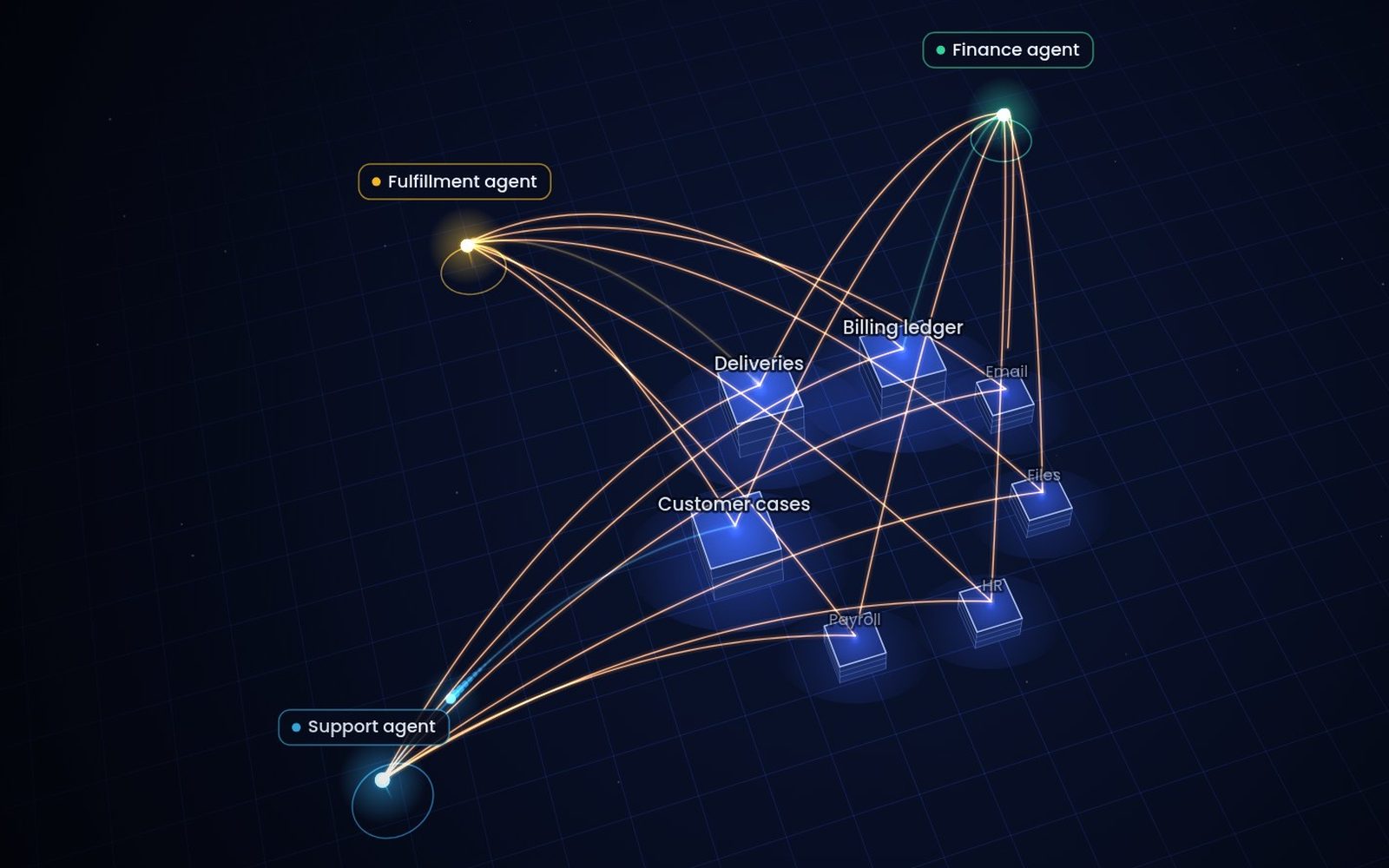
Agent trails spreading from three agents to every business system
Over-privileged

More access than the job needs

Agents inherit broad credentials, so one support bot can reach billing, HR and payroll.
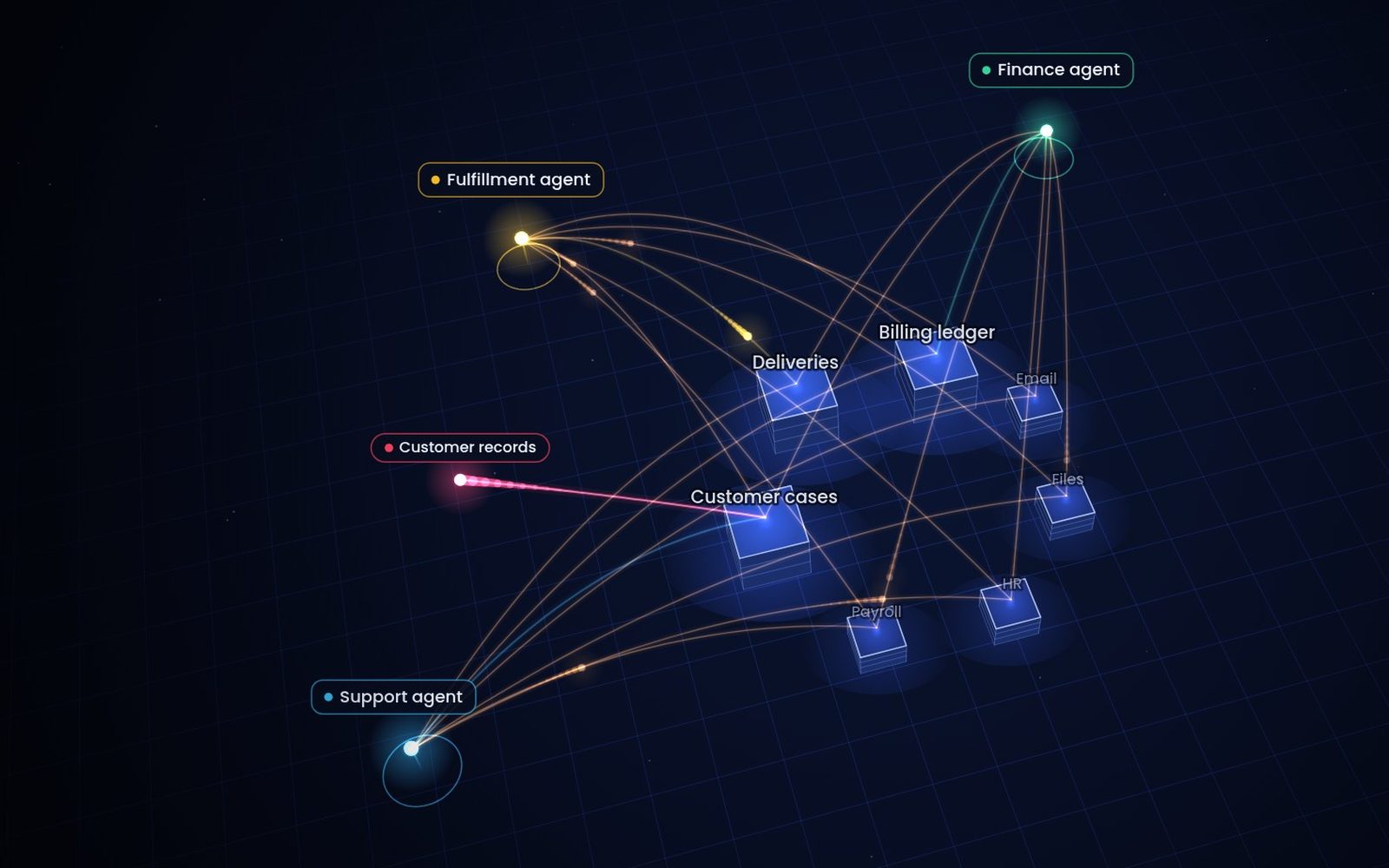
A red packet of customer records leaving the company map
Data leakage

Sensitive data slips out

Customer records, payment data and secrets flow through prompts, files and tool calls.
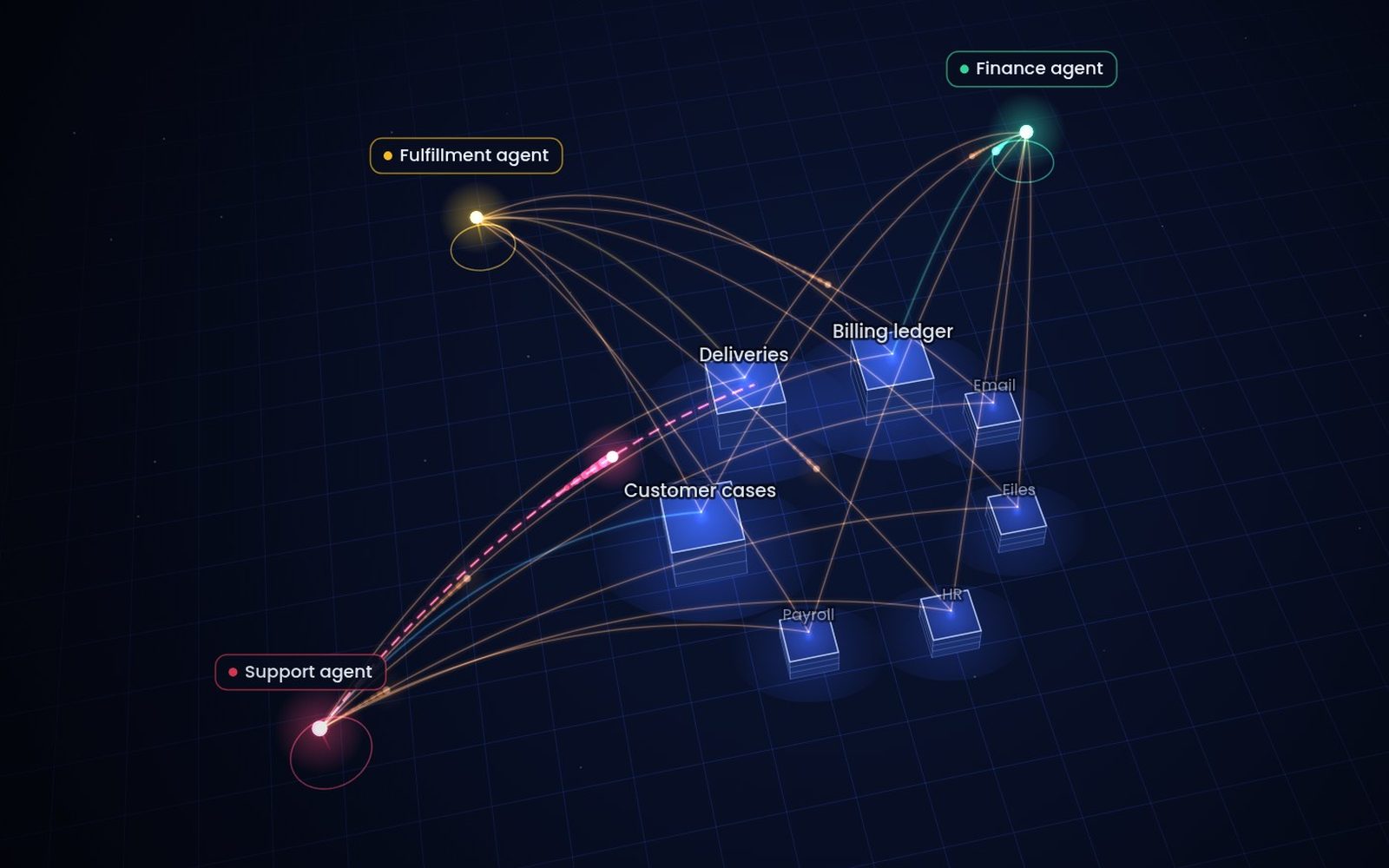
A hidden instruction turns an agent red and redirects it to the billing ledger
Manipulation

Tricked into unapproved actions

A hidden instruction in a document or web page can redirect an agent's work.
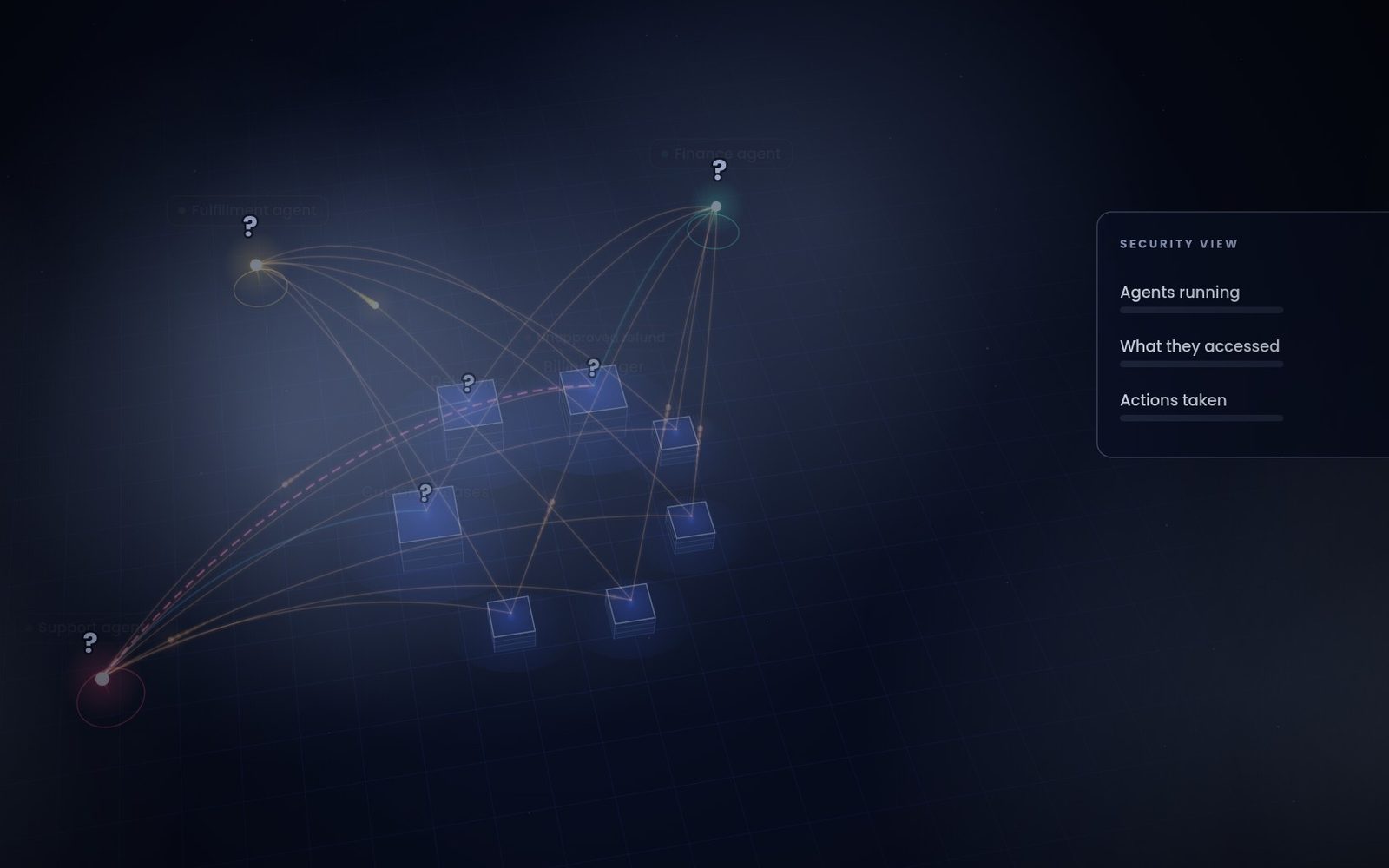
Fog over the map and a security view full of question marks
No visibility

No clear view of what ran

Security teams can't say which agents are running, what they touched or what they did.

The platform

Five controls, one fort around every agent.

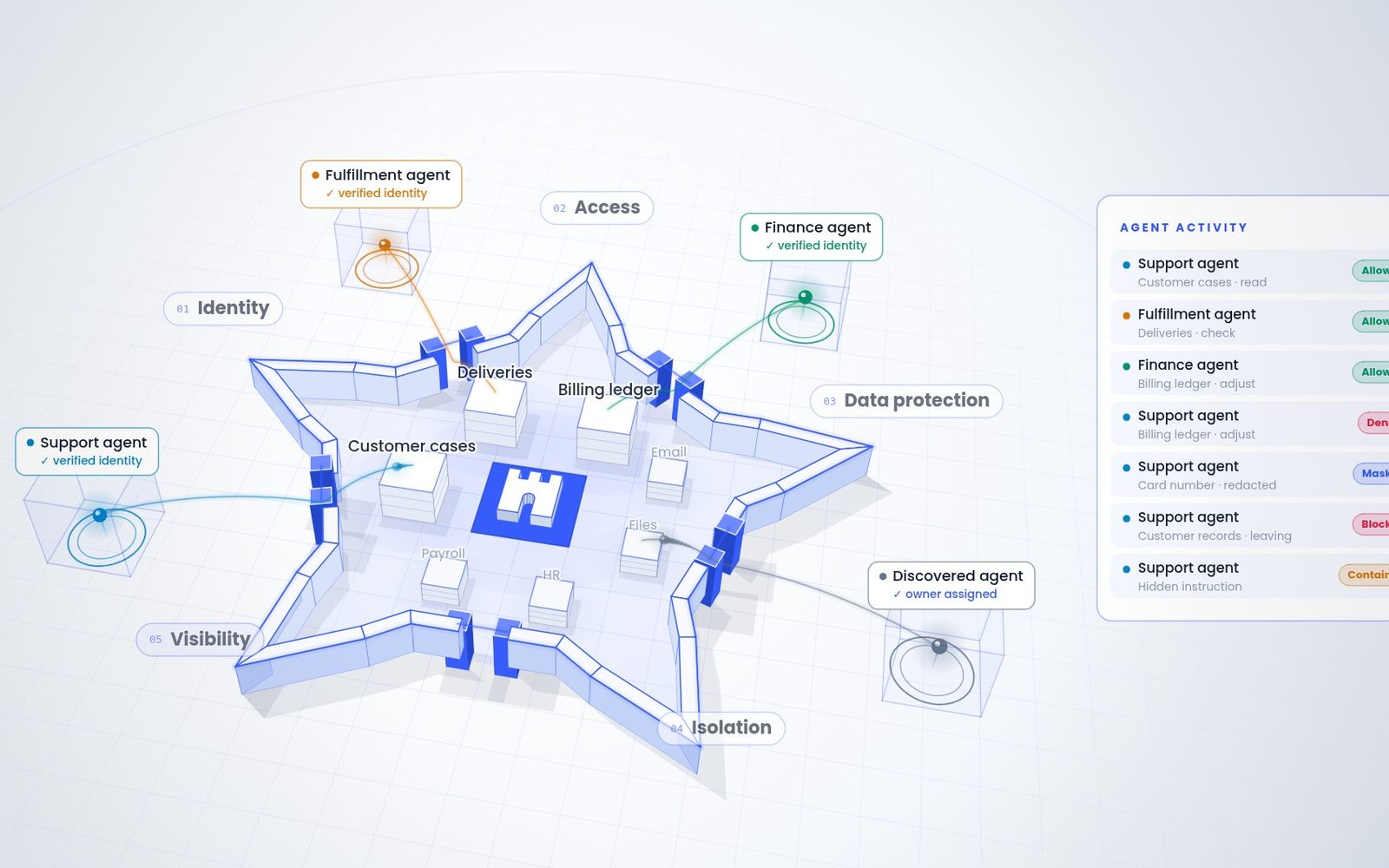
Each control answers a question your security team already asks. Together they let agents keep working while every request is identified, checked and recorded.
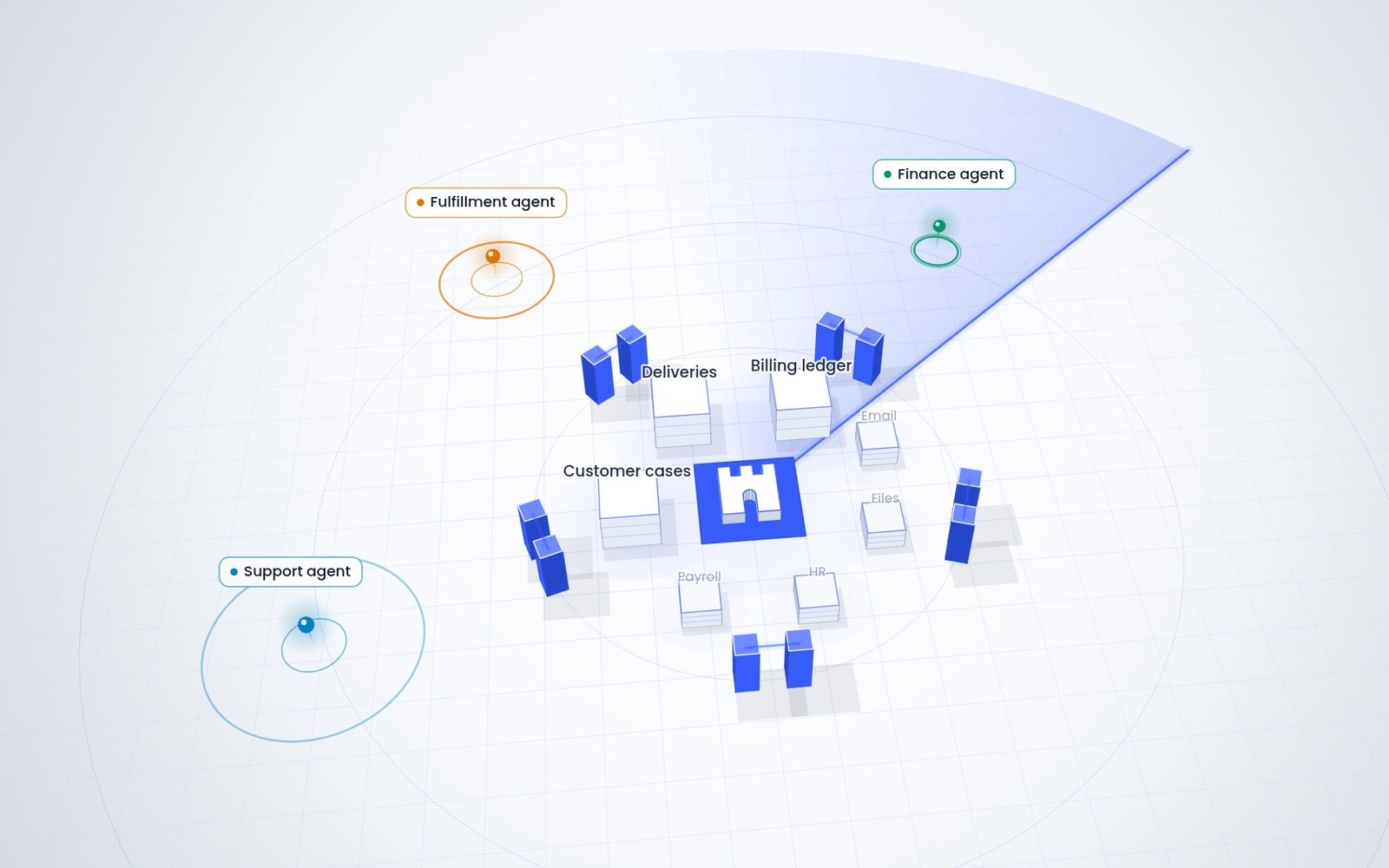
The five AgentFort controls arranged as the points of a star fort
A radar sweep across the company map finds every agent, including an unregistered one
01 · IDENTITY

Find every agent. Know who it answers to.

Connect your infrastructure once. AgentFort observes the agents already running and gives each one a cryptographic identity and an accountable owner.
  • Automatic discovery across endpoints, Kubernetes clusters, cloud accounts and telemetry, with no per-agent registration.
  • Careful classification. A script is not an agent until the evidence says so, so your inventory stays trustworthy.
  • One verified identity per agent. AgentFort uses the cloud or identity-provider identity an agent already has, and issues a SPIFFE identity when it has none.
  • Unregistered agents surface for review, with a clear owner before they get any access.
Product demo: how discovery finds your agentsWatch on YouTube ↗
Product demo: how every agent gets an identityWatch on YouTube ↗
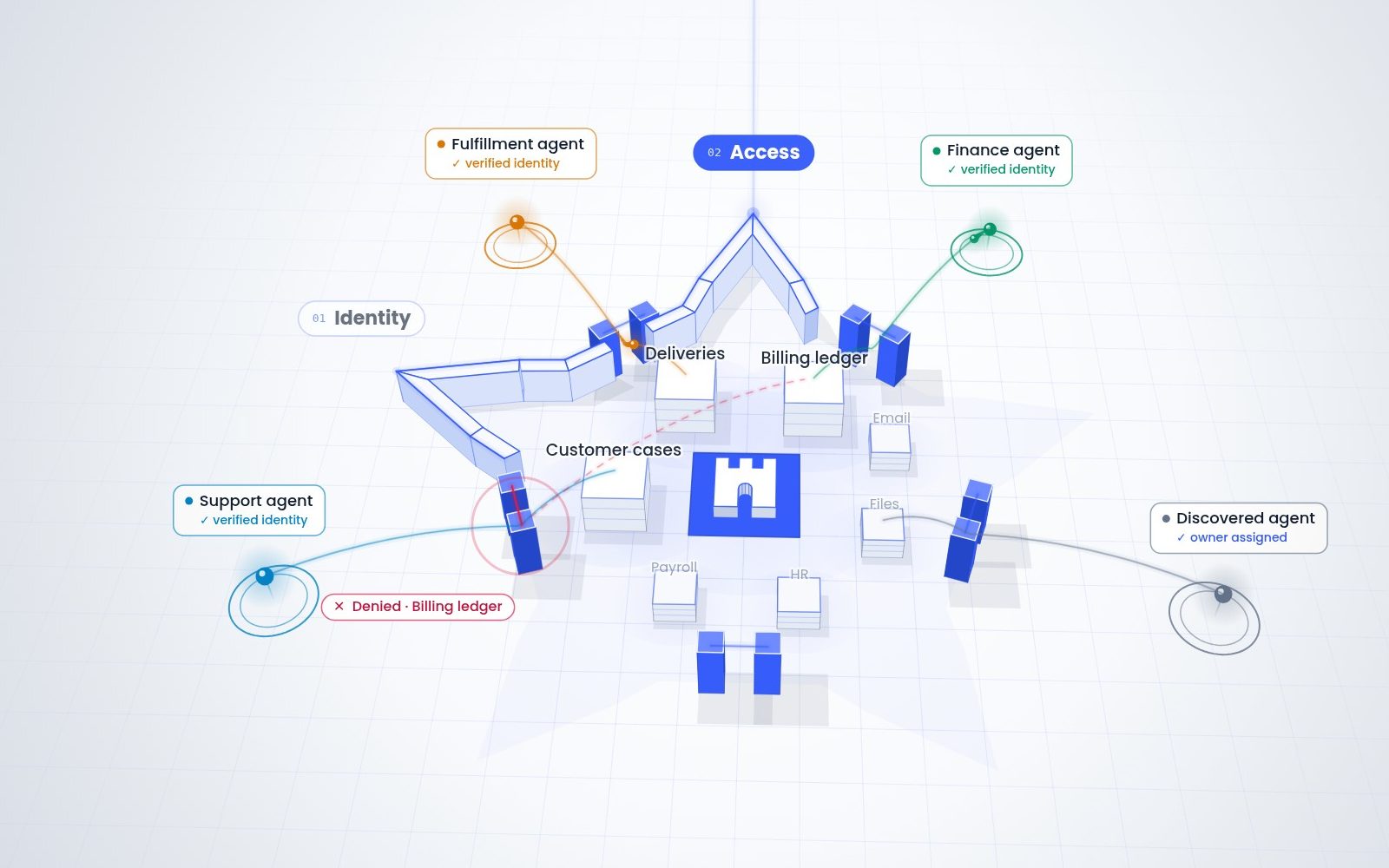
Each agent has one lane through its gate; the support agent's attempt to reach billing is denied
Access policyIllustrative
Support agents can read customer cases. They can't change billing.
permit (principal in Group::"support-agents",
        action == Action::"cases.read",
        resource in Service::"customer-cases");
forbid (principal in Group::"support-agents",
        action == Action::"billing.adjust", resource);
02 · ACCESS

Only the access each job needs.

Describe what an agent may do in plain language. AgentFort turns it into enforceable rules, lets you test them, and checks every request against them.
  • Plain-language policy, compiled to precise rules you can review before anything is published.
  • Access simulations show what a policy allows and denies before it goes live.
  • Bounded authority. Administrators set ceilings, owners delegate within them, and grants expire.
  • Enforcement next to your services, on your side, while each system's own permissions stay in force.
Product demo: least-privilege access for every agentWatch on YouTube ↗
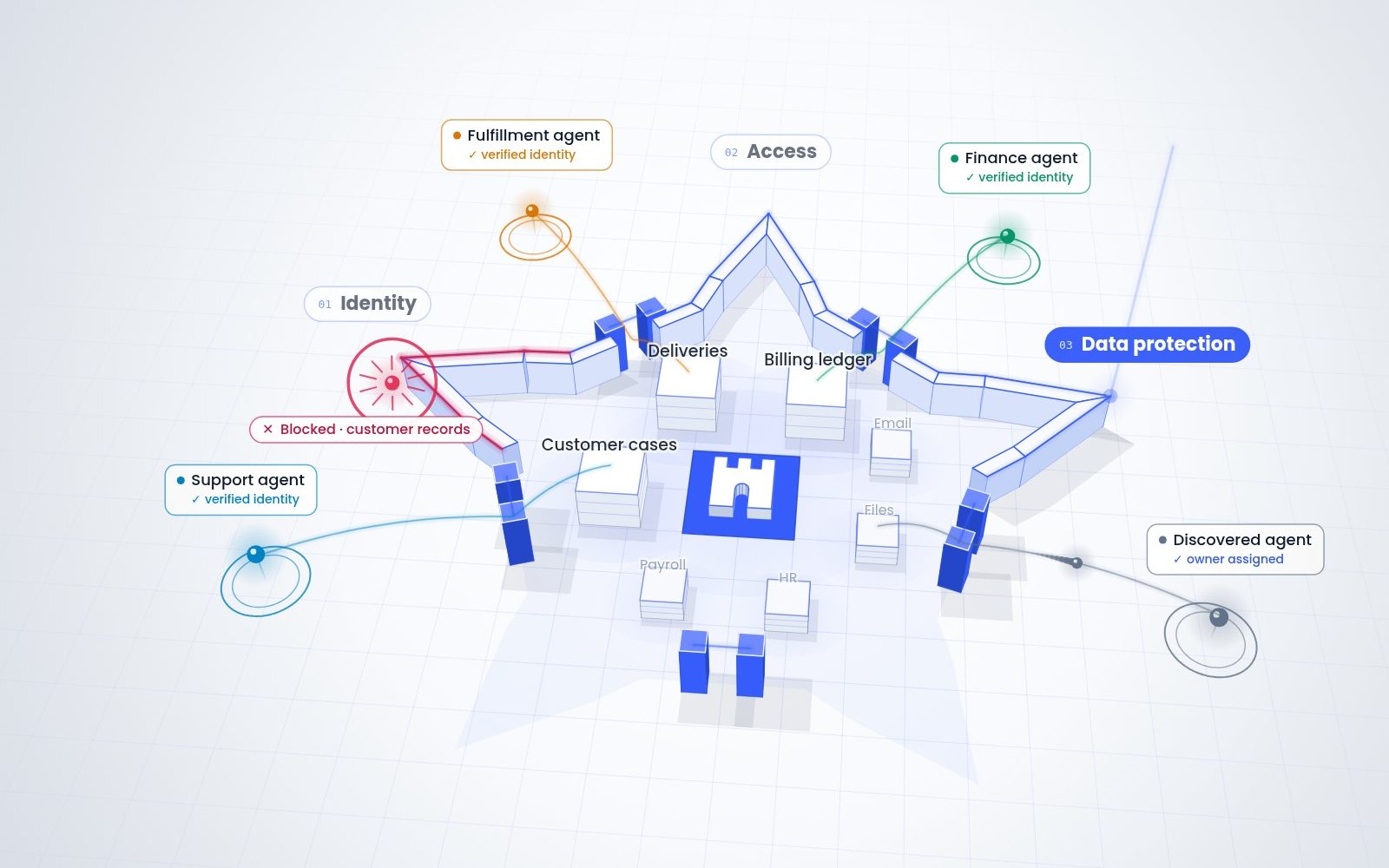
A card number is masked at the gate and a packet of customer records is blocked at the fort wall
Data protectionIllustrative
Case file · card 4111 2233 4455 1111 → 4111 •••• •••• 1111masked
Customer records export → external addressblocked
API key in tool outputremoved
Shared file · "ignore previous instructions…"flagged
03 · DATA PROTECTION

Sensitive data stays where it belongs.

AgentFort inspects the data moving through every agent, classifies what's sensitive, and masks or blocks it before it can leak.
  • Inspection of prompts, files and tool results as they pass between agents and your systems.
  • Classification of personal data, payment data and secrets, with labels that travel with the content.
  • Mask or block sensitive fields so work continues without exposing what it shouldn't.
  • Hidden-instruction detection and quarantine for imported files until they're scanned and labeled.
Product demo: keeping data safe with every agentWatch on YouTube ↗
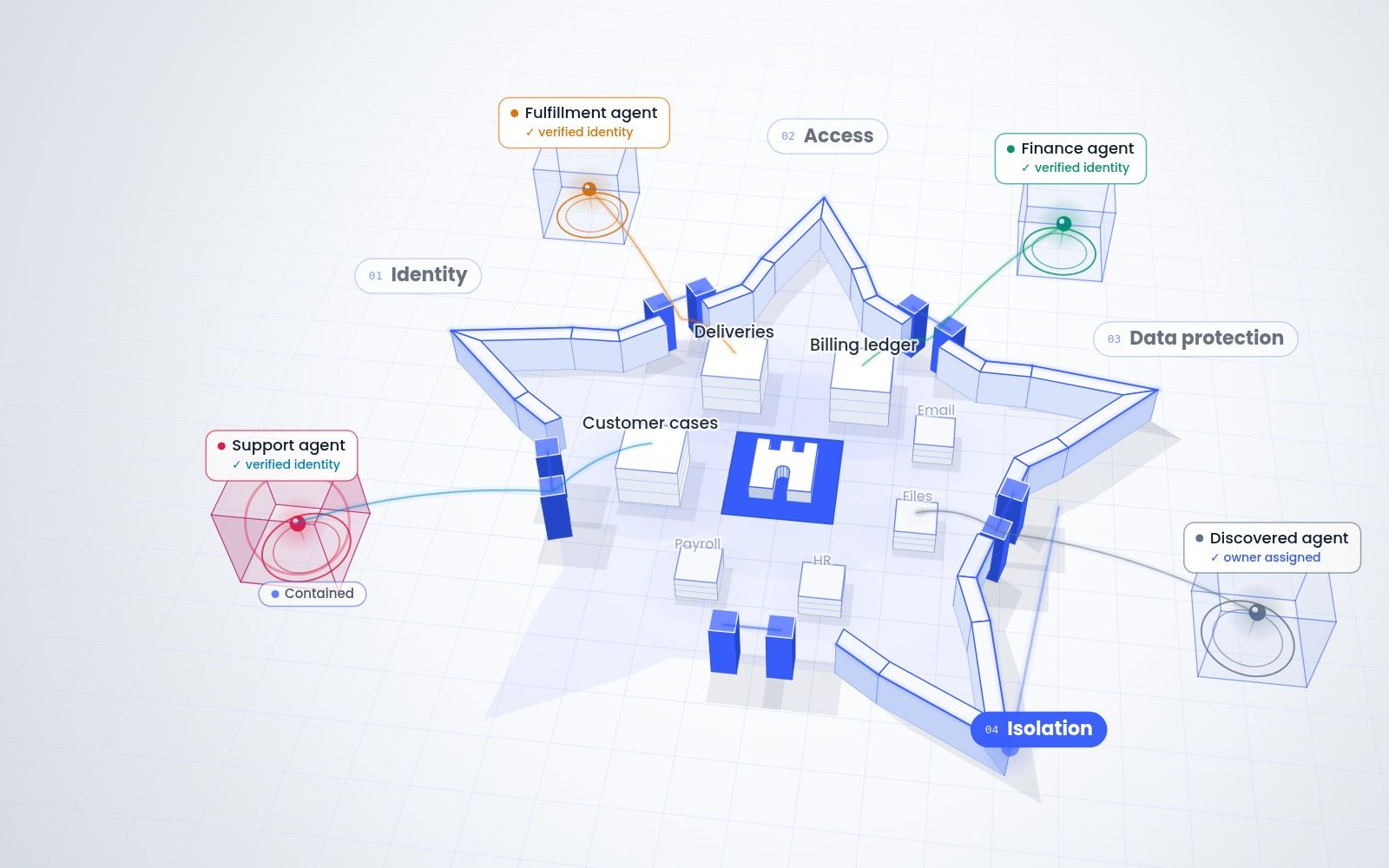
A manipulated agent sealed inside a glass cell; the red pulse stays inside
Contained eventIllustrative
Agentsupport-assistant · task 7f3a
TriggerHidden instruction in a shared document
AttemptedSend customer list to an outside address
Resultcontained no network path, no credentials
04 · ISOLATION

Contain what you can't predict.

Agents run in isolated environments. If one is manipulated, the damage stays inside its boundary.
  • A separate sandbox for each task, with direct network access blocked by default.
  • Controlled paths for browsing and file access, each checked against policy.
  • Credentials stay outside. Provider keys never enter the agent's environment.
  • Approval of the exact action for sensitive steps, valid once and within a budget.
Product demo: containing a manipulated agentWatch on YouTube ↗
The completed fort with an agent activity panel listing allowed, denied, masked, blocked and contained requests
How AgentFort decidedIllustrative receipt
Requestsupport-assistant → billing ledger · adjust
Identityverified workload · owner: Customer Service
Owner grantwithin delegation ceiling
Policysupport agents can't change billing
Decisiondenied before reaching the service
05 · VISIBILITY

See every agent, every access, every action.

Security teams get one place to see which agents are running, what they accessed and what they did, with the reasoning behind every decision.

  • A live inventory of agents, owners and connected business systems.
  • A receipt for every request showing identity, owner grant, policy and outcome.
  • Allowed and denied activity, filterable and grouped so patterns stand out.
  • Evidence kept on your side and reconciled to the console, with delivery gaps reported.
How it works

From first connection to enforced, recorded requests.

You connect infrastructure, not individual agents. AgentFort does the observing; your team makes the decisions about ownership and access.

STEP 1

Discover

Connect a cluster, cloud account, host group or telemetry source. Agents appear with the evidence that found them.

STEP 2

Identify

Matching workloads enroll with a verified identity and an accountable owner.

STEP 3

Control

Connect business systems, delegate bounded authority, then write, test and publish policy.

STEP 4

Enforce

Requests flow through AgentFort's gateway on your side. Every decision leaves a receipt.

AI agents send requests through the AgentFort gateway to business systems; the console manages policy and receives evidence AI AGENTS Support agent Fulfillment agent Finance agent AGENTFORT GATEWAY · YOUR SIDE Identity check Policy decision Data protection Isolation Evidence journal · a receipt for every request BUSINESS SYSTEMS Customer casesDeliveriesBilling ledger AgentFort console · policy, owners signed policy evidence request allowed only
Management

Console and control plane

In your cloud or network, or hosted by us. Policy, owners, inventory and investigations live here.

Observation and identity

Where agents run

Discovery collectors and workload identity in the scopes you connect. No desktop install for every employee.

Enforcement

Next to your services

The gateway and executor sit inside your boundary, so decisions and evidence stay on your side.

Built on open standardsSPIFFE / SPIREEnvoyCedarOPAOIDC single sign-onPostgreSQL
Compare

Where AgentFort fits next to the tools you already have.

AgentFort vs. traditional DLP

Traditional DLP watches people and endpoints. AgentFort inspects what agents send and receive, with the agent's identity and task attached.

AgentFort vs. API gateways

Gateways route and rate-limit traffic. AgentFort decides whether this agent, acting for this owner, may perform this operation.

AgentFort vs. identity providers

Your identity provider manages people and service accounts. AgentFort adds agent discovery, delegated authority and per-request policy on top.

Work with us

Three ways to start.

Securing agents now, shaping the product with us, or looking at the company: each path goes straight to the founder.

Security and platform teams

See it on your own agents

A working session on your own agents: where discovery, identity and enforcement sit in your environment, and the evidence they produce.

Request a demo
Design partners

Deploy AgentFort as a design partner

The full platform in your environment, a direct line to the team building it, and priority on your requirements.

Become a design partner
Investors

Read the thesis

Why AI agents need a new access-control layer, what is already built, and the founder building it.

For investors
Who builds AgentFort

Built by a founder who has shipped security automation at scale.

Raghuveer K, founder of AgentFort

Raghuveer K

Founder, AgentFort · previously Lead, Security Automation at Amazon

12 years building security automation, application security, identity and payments systems at Amazon, including the internal products Design Inspector and Deep Threat Modeler. Master's degree in Artificial Intelligence and named inventor on five issued patents in security automation and design analysis.

Prefer email?[email protected]Design partners:[email protected]